


How to Manage Multiple Social Media Accounts at Scale in 2026: The Complete Guide for Modern Digital Teams
Introduction
Managing one social media account is simple.
Managing dozens or hundreds of accounts across different platforms is a completely different challenge.
In 2026, businesses are no longer limited to maintaining a single online identity. Companies operate multiple brand pages, regional accounts, customer communities, marketing profiles, and campaign-specific accounts across platforms like X (Twitter), Instagram, Facebook, TikTok, LinkedIn, and more.
As digital operations grow, the biggest challenge is no longer creating an account.
The challenge is building a system that allows teams to:
- organize multiple accounts;
- maintain consistent workflows;
- manage different browser environments;
- simplify daily operations;
- scale without unnecessary complexity.
This is why professional teams increasingly rely on advanced browser profile management solutions and automation technologies.
The New Reality of Multi-Account Social Media Management
Social media has evolved from a simple communication channel into a critical business infrastructure.
A modern company may operate:
- multiple regional accounts;
- different product accounts;
- customer support profiles;
- influencer accounts;
- testing environments;
- marketing campaign accounts.
For example, a global brand may need separate digital operations for:
- United States customers;
- European customers;
- French-speaking markets;
- Asian markets.
Each audience may require different content, different strategies, and different workflows.
The result?
More opportunities — but also more operational complexity.
Why Businesses Struggle With Multiple Social Media Accounts
1. Manual Account Management Does Not Scale
When teams manage only a few accounts, manual workflows may work.
But as account numbers increase, simple tasks become time-consuming:
- logging in and out;
- switching between profiles;
- checking messages;
- publishing updates;
- monitoring activity;
- managing security verification.
The more accounts a business operates, the more important efficiency becomes.
2. Every Account Requires a Consistent Environment
One of the biggest challenges in multi-account management is maintaining organized environments.
Professional teams often need to separate different accounts and projects.
A structured browser profile system helps users manage:
- different sessions;
- different account environments;
- separate project workflows;
- organized account information.
Instead of treating every account as an isolated login, businesses can create a professional management system.
3. Account Security Processes Are Becoming More Complex
Social platforms continuously improve their security systems.
As a result, users may encounter:
- login verification;
- email confirmation;
- two-factor authentication;
- security checks;
- additional verification steps.
These processes exist to protect accounts, but they can create challenges for teams managing multiple accounts.
A professional workflow requires proper organization and accurate account information.
Understanding Browser Profiles in Social Media Operations
A browser profile is more than just a saved login.
For professional account management, browser profiles can help separate different working environments.
A dedicated profile can contain:
- browser settings;
- account information;
- extensions;
- cookies;
- session data;
- network configuration.
This allows teams to maintain better organization when managing multiple digital identities.
Why Browser Fingerprints Matter in Modern Digital Workflows
Every browser environment contains technical characteristics that make it unique.
These characteristics are commonly referred to as a browser fingerprint.
They can include:
- browser information;
- operating system details;
- language settings;
- device characteristics;
- other technical parameters.
For businesses managing multiple digital environments, understanding browser profiles and fingerprint technology has become an important part of modern operations.
However, technology alone is not enough.
Successful account management also depends on:
- quality workflows;
- account organization;
- consistent processes;
- responsible usage.
The Role of Anti-Detect Browsers in Multi-Account Management
Anti-detect browsers are designed to help users create and manage separated browser environments.
Businesses and marketers may use these tools to organize different digital projects.
Common use cases include:
- managing multiple client projects;
- separating business environments;
- organizing different workflows;
- improving operational efficiency.
The goal is not simply to create more accounts.
The goal is to build a better management system.
Why Automatic Login Can Fail Even When Manual Login Works
One common challenge faced by multi-account managers is the difference between manual and automated login.
An account may successfully log in manually but require additional steps during automated workflows.
Possible reasons include:
- security verification;
- 2FA requirements;
- email confirmation;
- account changes;
- network environment differences.
This is why professional account management requires more than simply storing usernames and passwords.
A complete workflow must consider the entire account environment.
How MarketerBrowser Helps Businesses Organize Digital Operations
MarketerBrowser was designed for professionals who need structured browser profile management.
Instead of managing accounts through disconnected browser sessions, users can organize multiple environments from one platform.
MarketerBrowser helps users:
- create separated browser profiles;
- manage different account environments;
- organize social media workflows;
- simplify multi-account operations.
For agencies, marketers, and digital teams, better organization means better scalability.
Best Practices for Managing Multiple Social Media Accounts
Keep Account Information Organized
Maintain clear records for:
- account ownership;
- project assignment;
- login information;
- workflow status.
Organization becomes increasingly important as operations grow.
Maintain Consistent Workflows
Avoid constantly changing processes.
A predictable workflow makes troubleshooting easier and improves team productivity.
Review Security Settings Regularly
Make sure accounts have:
- updated recovery information;
- proper verification methods;
- accurate account details.
Use Quality Infrastructure
Successful multi-account management depends on the complete setup:
- reliable tools;
- organized profiles;
- proper workflows;
- stable environments.
The Future of Social Media Account Management
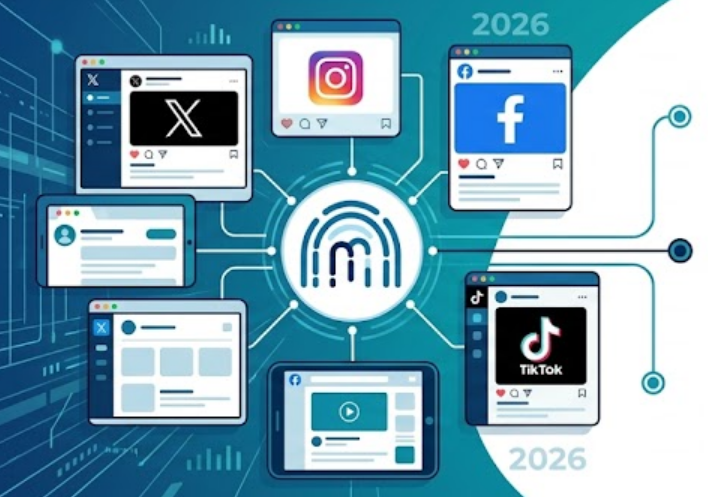
The future of digital marketing is moving toward intelligent automation and better operational systems.
Businesses will increasingly use:
- AI-powered workflows;
- automated monitoring;
- advanced browser management;
- centralized digital operations.
The companies that succeed will not simply have more accounts.
They will have better systems.
Conclusion
Managing multiple social media accounts is no longer just a marketing task.
It has become a digital operations challenge.
Businesses need reliable systems that help them organize accounts, manage workflows, and scale their online presence efficiently.
Browser profile management, automation tools, and structured processes are becoming essential components of modern digital operations.
MarketerBrowser helps professionals build a more organized foundation for managing multiple online environments in 2026.
Because successful digital growth does not come from managing more accounts.
It comes from managing them smarter.